
 Pусский
Automatic Control System
An automatic control system is a system designed to regulate the behavior of a machine, process, or environment without constant human intervention. It uses sensors, controllers, and actuators to monitor conditions, compare them with a desired set point, and make corrections automatically. These systems are widely used in industrial production, transportation, energy management, robotics, and everyday appliances.The main purpose of an automatic control system is to maintain stability, accuracy, and efficiency. For example, in a temperature control system, a sensor measures the current temperature and sends the data to a controller. The controller compares the measured value with the target value and then sends a signal to a heating or cooling device. As a result, the temperature is kept within the required range. This same principle can be applied to speed control, pressure control, liquid level control, and many other applications.An automatic control system usually consists of several key parts. The first part is the reference input, which represents the desired value or goal. The second part is the sensor or measuring device, which detects the actual output of the system. The third part is the controller, which processes the input signal and decides what action should be taken. The fourth part is the actuator or final control element, which carries out the controller’s command. In many systems, feedback is used to improve performance. Feedback means that the output is continuously measured and returned to the controller, allowing the system to adjust itself in real time.There are two common types of control systems: open-loop and closed-loop. In an open-loop system, the control action does not depend on the output. It is simple and low-cost, but it cannot correct errors automatically. In a closed-loop system, the output is measured and compared with the desired value, so the system can automatically correct deviations. Closed-loop systems are more accurate and reliable, especially when conditions change frequently.Automatic control systems offer many advantages. They reduce human effort, improve product quality, increase productivity, and enhance safety. They can operate continuously and respond quickly to changes. However, they also require proper design, calibration, and maintenance. If sensors fail or controllers are not tuned correctly, the system may become unstable or perform poorly.With the development of digital technology and artificial intelligence, automatic control systems are becoming more intelligent and flexible. Modern systems can analyze data, learn patterns, and optimize performance with greater precision. As a result, automatic control systems play an increasingly important role in modern industry and daily life.
Products
Category:
-
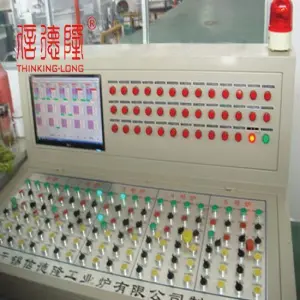
Automatic Control System
Category: Cooling & Automation SystemBrowse number: 270Number:Release time: 2026-06-05 21:22:25Complete automatic control system with PLC cabinets and operation consoles. Features process interlock, fault alarm, real-time data display, automatic data storage and historical record checking.
News
Category:
No search results found!
Case
Category:
No search results found!
Video
Category:
No search results found!
Download
Category:
No search results found!
Job
Category:
No search results found!
Featured Products
No search results found!



 WhatsApp
 Phone
Phone